
What you will be able to do
Use this guide to make a better decision.
- Match the quote to the campaign message before the channel format.
- Protect context when shortening a line for social use.
- Use one quotation consistently without making every post identical.
Quotes are tempting in social content because they are fast. They give a post a clean shape. They look good in a carousel. They can make a campaign feel a little more thoughtful. But finding quotes for social media campaigns is not the same as finding a nice line for a one-off post.
They can also make a brand sound like every other brand.
The difference is whether the quote is doing campaign work. A useful quote supports the audience, moment, message, and channel. A generic quote is just borrowed emotion with a logo nearby.
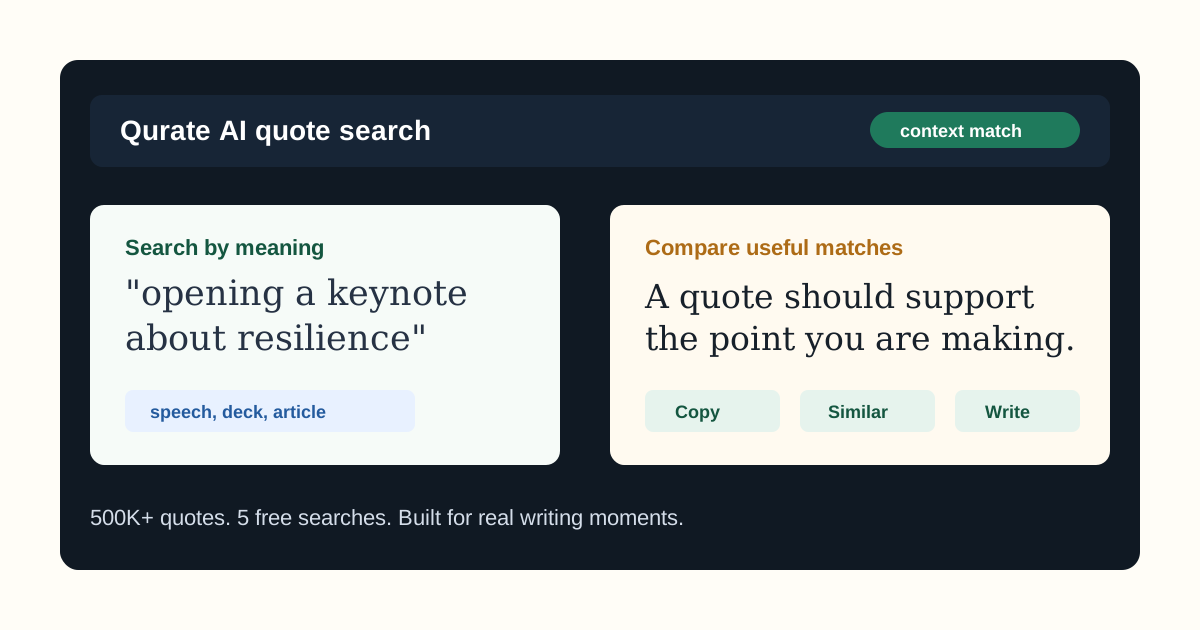
Qurate helps marketers and creators search by context. Instead of browsing broad quote lists, you can describe the product moment, audience, brand tone, and post format you need.
Start with campaign intent
A campaign quote should support the reason the post exists.
Is the post building anticipation? Explaining a belief? Reframing a problem? Celebrating a launch? Giving the audience a line they will want to share?
Each intent needs a different quote.
For a launch post, you might search:
a concise quote for announcing a creative tool that helps people find the right words
For a brand belief post:
a thoughtful quote about making communication more human, for a product aimed at writers
For an audience education post:
a plainspoken quote about focus for a carousel about doing fewer things well
Those prompts give the quote a job. They are more useful than “creativity quote” or “marketing quote” because they include the campaign situation.
Match quote tone to brand tone
Quote tone becomes brand tone the moment you post it. If your voice is practical, a highly poetic line may feel off. If your campaign is reflective, a punchy quote may feel too sharp. If your product copy is warm and direct, a grand quote can sound like someone else walked into the room.
Before searching, name the tone:
- Warm and encouraging.
- Direct and practical.
- Smart but plainspoken.
- Reflective and human.
- Sharp and concise.
Then judge the results against the brand voice. A quote should make the post feel more like the brand, not less.
This is a useful place to apply semantic quote search. You are matching meaning and emotional texture, not only a topic.
Use quotes as hooks, not substitutes
A quote can be a strong opening line for a caption or carousel. It should not replace the campaign message.
Try this structure:
- Quote as hook.
- One sentence connecting the quote to the campaign idea.
- Practical explanation or product context.
- Clear action.
For Qurate itself, a post might open with a quote about memory or language, then connect that thought to the problem of finding quotes by meaning. The quote opens the door. The rest of the post still has to make the point.
If the same campaign includes a webinar, deck, or launch talk, the guide on quotes for presentations can help adapt the quote for slides.
Build a small quote bank
For a campaign, do not search once and stop. Build a small bank of quote options for different moments.
You might need:
- A teaser quote.
- A launch-day quote.
- A customer education quote.
- A founder-note quote.
- A recap quote.
These should not all say the same thing. A campaign has different moments, and the quotes should support different angles inside the same larger idea.
Qurate’s 500K+ quote library can help you compare options around a theme without restarting from zero every time.
Avoid quote-only calendars
Quote posts can be useful, but a content calendar built mostly from borrowed lines starts to feel thin. Use quotes to sharpen original ideas, not to avoid having them.
A good quote post should answer:
- Why this quote?
- Why now?
- Why from this brand?
- What should the audience do next?
If you cannot answer those questions, the quote is probably not attached to a real campaign idea.
For longer thought leadership, using quotes in articles covers how to frame quotes inside paragraphs without sounding generic.
Search with the channel in mind
A LinkedIn post, X thread, Instagram carousel, email opener, and launch landing page all treat quotes differently. Add the channel to the prompt.
Examples:
- “A short quote for a LinkedIn post about thoughtful communication at work.”
- “A warm quote for an Instagram carousel about creativity and finding better words.”
- “A sharp quote for an email opener about focus and fewer priorities.”
The more specific the channel and campaign role, the easier it is to judge the result.
Search campaign quotes in Qurate and try one real post idea before turning it into a campaign asset.
Continue in Qurate
Search with the context you have already worked out.
Bring the idea, audience, setting, and tone from this guide into Qurate, then compare the matches in your actual draft.

Written by
App Cradle Editorial Team
The App Cradle team writes from hands-on product work in quote discovery, writing tools, and semantic language exploration.
Continue learning
Take the next useful step.
 Quote Search
Semantic Quote Search: Find Quotes by Meaning, Not Just Keywords
A human guide to semantic quote search: how to find quotes by meaning, tone, and context when exact keywords are not enough.
Read the guidePresentationsHow to Find Quotes for Presentations and Slide Decks
A practical guide to finding quotes for presentations that are readable, relevant, and useful on real slides.
Read the guideSpeechesHow to Find the Right Quote for a Speech
A practical, human guide to finding speech quotes that fit the room, the point, and the tone without sounding pasted on.
Read the guide