What you will be able to do
Use this guide to make a better decision.
- Choose a quote for the paragraph's job, not its topic alone.
- Frame the borrowed words with your own setup and analysis.
- Remove any quotation that leaves the paragraph unchanged.
Quotes can make an article feel sharper, warmer, and more memorable. They can also make it feel like the writer got tired and outsourced the interesting sentence.
The quote is rarely the whole problem. The problem is usually placement. A quote that floats into an article without context feels decorative. A quote that arrives at the exact moment the reader needs it can make the whole paragraph click.
That is the judgment you need when you use quotes in articles: not “Is this a good quote?” but “Does this quote make this piece better?”
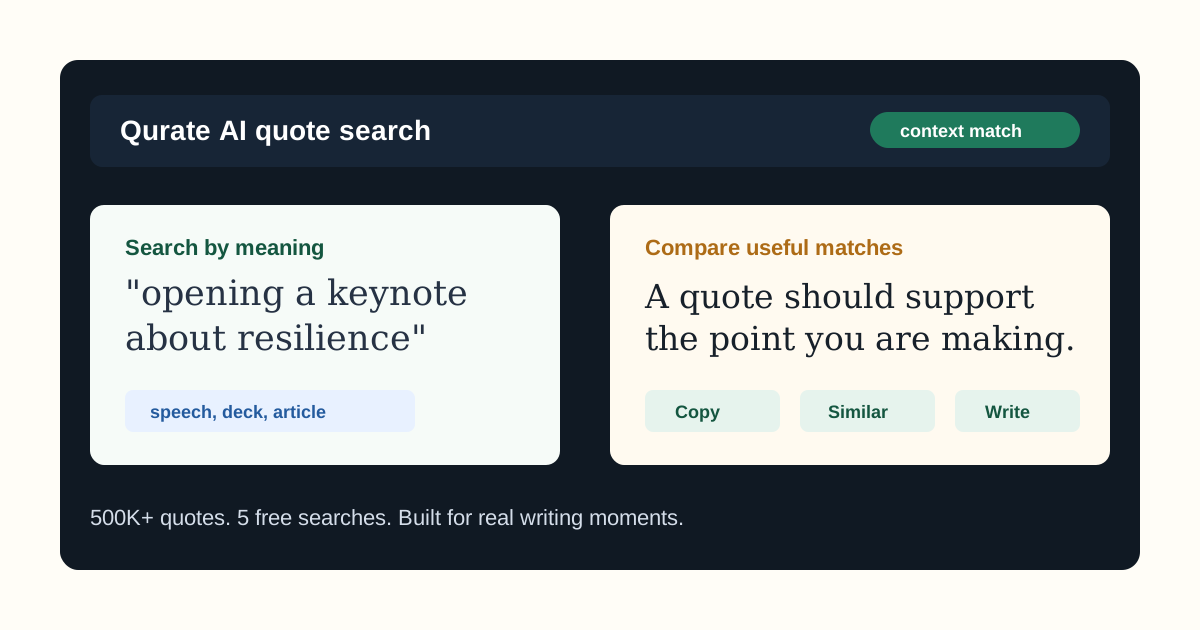
Qurate helps because you can search by the paragraph’s context, not just a broad topic. Describe the idea, audience, tone, and kind of support you need, then compare matches from a 500K+ quote library.
Start with the paragraph, not the topic
Broad topics create broad results. A search for “creativity quote” or “leadership quote” may return lines that sound polished but do not fit the article you are actually writing.
Start with the paragraph’s job instead:
- Is the quote introducing a problem?
- Is it making an abstract idea feel human?
- Is it adding contrast?
- Is it giving weight to a claim?
- Is it helping the reader pause before a conclusion?
Then turn that job into the prompt.
Instead of:
quote about focus
Try:
a plainspoken quote for an article about protecting focus during constant notifications
Instead of:
quote about loneliness
Try:
a thoughtful quote for an essay about loneliness in a connected world
That is the same logic behind semantic quote search: meaning first, wording second.
Put the quote where it changes the paragraph
A quote should alter the shape of the writing around it. If you can remove the quote and nothing changes, the quote was probably filler.
There are a few places where quotes tend to work well.
Use a quote after you state an idea. This gives the reader your point first, then lets the borrowed line sharpen it.
Use a quote before a turn. This works when you are moving from problem to possibility, from evidence to reflection, or from a familiar assumption to a better one.
Use a quote near the ending. A closing quote can give the reader a memorable phrase for the article’s final thought.
Be careful with opening paragraphs. A quote at the very beginning can work, but only when it creates immediate momentum. If the reader has to wait for you to explain why the quote matters, start with your own sentence instead.
Frame the quote like a writer
A quote should not be stranded. Give it a sentence before and after.
Weak framing sounds like this:
Here is a quote about focus.
Better framing sounds more like:
The useful question is not whether distraction exists, but whether we are willing to design around it.
That sentence gives the quote a runway. It tells the reader what to listen for.
After the quote, add one sentence of interpretation. Do not assume the reader will connect it to your argument in exactly the way you intend. Your job is not just to find the quote. Your job is to make it mean something inside your article.
Do not confuse famous with useful
Famous quotes are not automatically bad. Some are famous because they are durable. But familiarity changes how a line reads. If your audience has seen it many times, the quote may create recognition instead of insight.
When searching, look for lines that are clear, relevant, and specific enough for the article. You do not need the most famous quote on the topic. You need the quote that makes the paragraph work.
If a result is close but not quite right, search the idea again with more context: tone, audience, format, and the claim you are trying to support.
If the article may later become a talk or webinar, the guide on finding quotes for speeches can help you adapt the line for spoken delivery.
Use fewer quotes than you think
Too many quotes can make an article feel assembled instead of written. A good quote should do something your own sentence cannot do as cleanly.
Use a quote when it:
- Compresses a complicated idea.
- Adds emotional texture.
- Gives authority without making the article heavy.
- Offers a memorable turn of phrase.
- Creates a useful contrast with your own point.
If the quote merely repeats what you already said, cut it or keep searching.
For classroom and academic writing, quote discovery for students covers how to use quotes as support without letting them replace your own analysis.
Search with the draft open
The best quote search happens with the article in front of you. Copy the paragraph’s idea into your prompt. Add the audience and tone. Then judge the results by how naturally they fit into the draft.
Try:
a reflective quote for an article about why teams need fewer priorities, not more motivation
That prompt is easier to evaluate than “motivation quote.” It gives Qurate context, and it gives you a standard for choosing.
Open Qurate quote search and test it with one paragraph from a real article. Five free searches are enough to see whether the results fit your writing workflow.
Continue in Qurate
Search with the context you have already worked out.
Bring the idea, audience, setting, and tone from this guide into Qurate, then compare the matches in your actual draft.

Written by
App Cradle Editorial Team
The App Cradle team writes from hands-on product work in quote discovery, writing tools, and semantic language exploration.
Continue learning
Take the next useful step.
 Quote Search
Semantic Quote Search: Find Quotes by Meaning, Not Just Keywords
A human guide to semantic quote search: how to find quotes by meaning, tone, and context when exact keywords are not enough.
Read the guidePresentationsHow to Find Quotes for Presentations and Slide Decks
A practical guide to finding quotes for presentations that are readable, relevant, and useful on real slides.
Read the guideStudentsHow to Find and Use Quotes for Essays, Debates, and Presentations
A practical guide to finding useful quotations for student work while keeping your own argument and analysis in charge.
Read the guide